
The Lighter incident reveals risks that extend beyond withdrawal controls
Lighter API key incident can cause losses without withdrawal rights; trading permissions, account exposure, and access rules create financial risk.
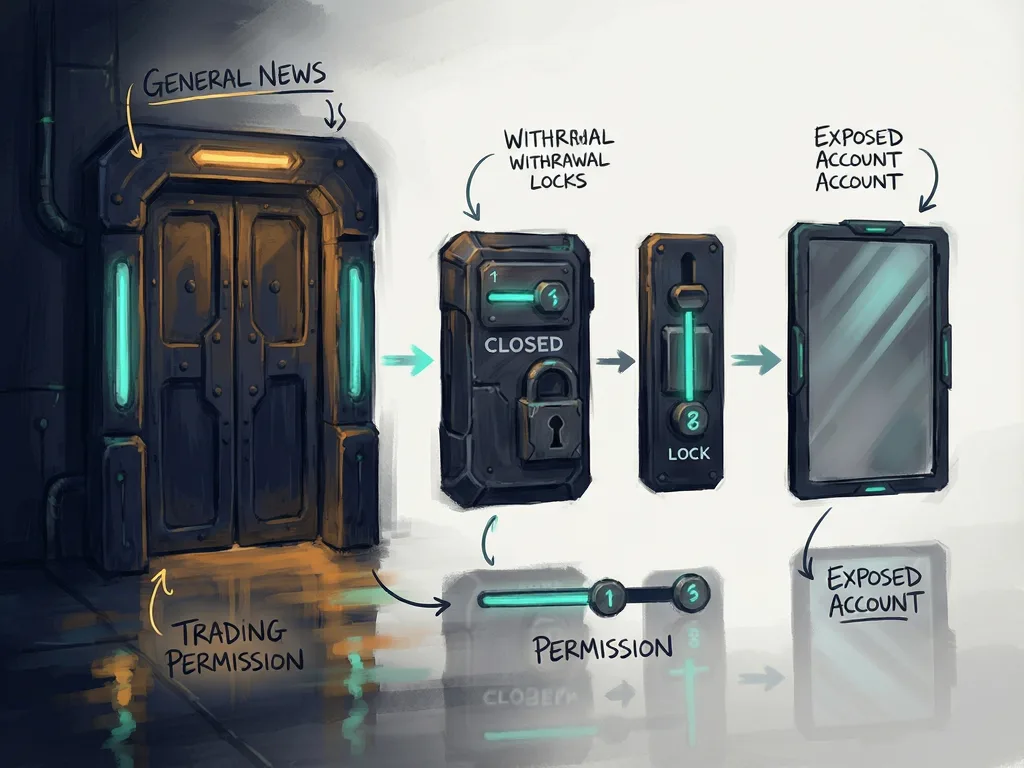
A recent incident at Lighter, a decentralized perpetual futures exchange, involved over $10 million. According to Lighter’s postmortem, an attacker used compromised API keys to move funds into a public pool and redeem shares held through another account. Bitquery traced a withdrawal of 10.39 million USDC. Lighter said its protocol and smart contracts were unaffected.
The loss matters because it shifts attention away from the usual question: can this key withdraw funds? In decentralized trading systems, a key may not need withdrawal rights to cause financial damage. If it can trade, move funds into a shared pool, or claim shares through another account, it can still create a loss.
What happened to Lighter?
Lighter’s incident was not described as a smart contract exploit. The postmortem says the attacker used compromised API keys. Those keys allowed the attacker to move funds into a public pool and redeem shares held through another account.
Bitquery traced the withdrawal as 10.39 million USDC. Lighter has since restored deposits and withdrawals and returned about $5 million in USDC to the affected trader. The incident was also shown in a Lighter infographic sourced from Bitquery.
Why are withdrawal controls not enough?
Withdrawal controls are important because they can stop a compromised credential from sending assets to an outside address. But trading permissions can create other paths to loss. A key that cannot withdraw may still be able to place orders, move assets into a pool, or affect positions held under another account.
The postmortem put the point simply: “A key that can trade can still lose you money if someone else holds it.”
The risk of a credential depends on more than whether it can withdraw and to which destinations. It also depends on the balances it can reach, the transactions it can initiate, and the exposures it can create. That is why the incident shows the shortcomings of focusing security on withdrawal controls alone.
What did Lighter change after the incident?
Lighter said it now requires wallet signatures for transfers into public pools. It also made API-key signatures non-public. The exchange plans IP allowlists and configurable permissions for individual keys.
These changes address different parts of the problem. A wallet signature requirement makes it harder for an attacker to move funds into a public pool without access to the wallet. Making API-key signatures non-public reduces their visibility. IP allowlists can limit the machines or networks that can use a key. Configurable permissions can restrict what each key is allowed to do.
Deposits and withdrawals have been restored, and Lighter returned about $5 million in USDC to the affected trader.
Why do smart contract audits miss this?
Many security reviews for decentralized exchanges focus on smart contracts: are the contracts free from exploitable code flaws? Lighter said the protocol and smart contracts were unaffected, which means the incident did not turn on a broken contract.
The lesson is that cybersecurity reviews need to look past smart contract vulnerabilities. They need to consider the gap between the permissions a system grants and the financial consequences those permissions allow. Safe contracts can still sit behind risky access rules.
What does this mean for API key users?
For users of decentralized trading systems, the practical question is not only whether a key can withdraw. Each credential needs a clear mandate. A mandate can specify accessible accounts, permitted markets, order sizes, pricing tolerances and aggregate exposure. Moving capital into a shared pool or expanding those limits can require separate authorization.
The same logic applies to additional signatures. A second signature adds meaningful protection when its approval process independently evaluates the transaction’s financial effect. If the second approval does not check the money impact, it may add friction without adding much security.
What other context did the original coverage include?
The original coverage also pointed to a related security trend: Google says hackers use AI agents to find and exploit software flaws. That point does not describe the Lighter incident, but it reinforces why credentials and permissions need tighter controls as attackers search for weaknesses.
The coverage directed readers to the Daybreak Newsletter for the full analysis of how decentralized exchange permissions go beyond withdrawals. It also included a magazine teaser: Bitcoin to $1 million by 2030? “Almost certainly not,” says Dragonfly’s Qureshi.
This article explains the incident for readers; it is not investment advice.
API keysdecentralized exchangestrading permissionswithdrawal controlsDeFi security
Related reading


Comments 0
Never post a seed phrase, private key or screenshot of your wallet in the comments.
- No comments yet.