
Hackers inserted malware that steals credit card and cryptocurrency data into 178 major websites.
Attackers used an Optimizely flaw to inject malware into 178 sites, stealing card data, replacing crypto addresses, and exposing iOS users.
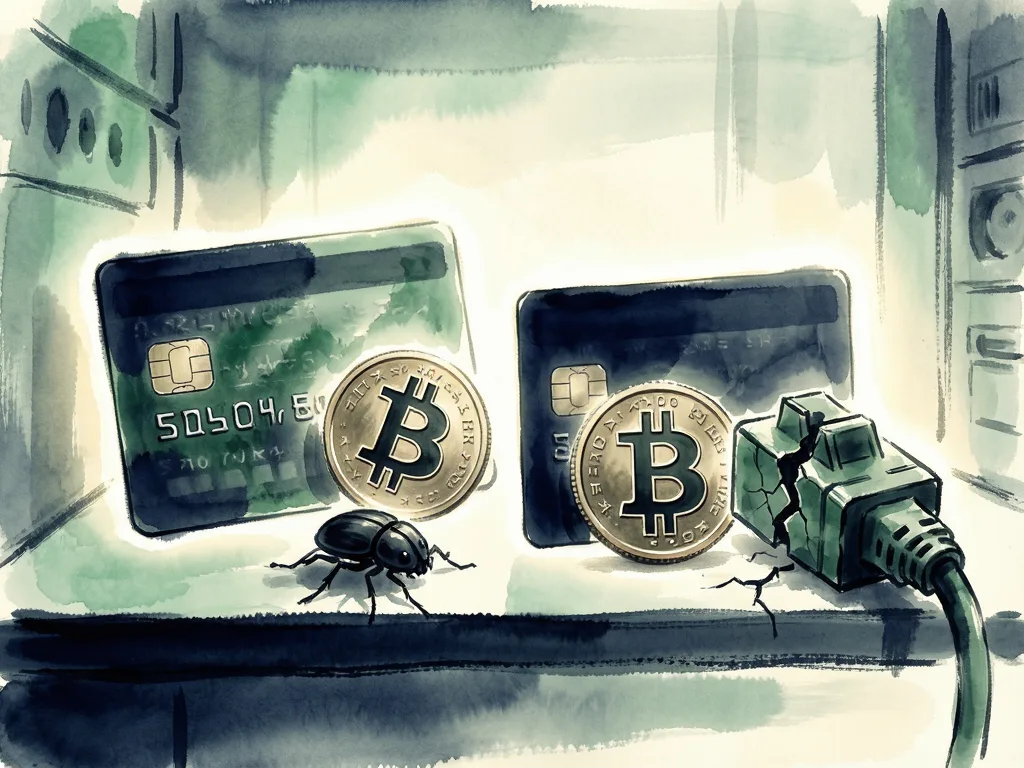
What happened?
On Monday, security researchers reported that several high-traffic websites were serving malware to visitors. The campaign was named Optimjack by researcher Amirul Iman. It delivered malicious code through website scripts, including scripts hosted by Optimizely, a website optimization platform.
The campaign affected website scripts belonging to 178 organizations, according to a Report URI investigation. Those organizations included hardware wallet maker Ledger, OANDA / Coinpass, and trading platforms IG, Interactive Investor and TMS Brokers. Other affected brands included IKEA, Salesforce, Zoom, the BBC and CNN. These websites collectively attract millions of visitors a day.
The article was updated twice after the initial reporting. On November 17 at 4:43 am UTC, the update added a statement from Salesforce and analysis of stolen funds by Alex Thorn of Galaxy Digital. On November 18 at 4:50 pm UTC, the update added a statement from OANDA on behalf of Coinpass and TMS Brokers.
How did malicious code reach visitors?
Optimizely lets businesses run experiments and custom code on their websites through JavaScript snippets. A spokesperson for Optimizely confirmed to Cointelegraph on Monday that an unauthorized party exploited a vulnerability in its Experimentation account signup flow to add malicious JavaScript to some customer projects.
Because the malicious code was inserted into customer projects, otherwise legitimate scripts could load the malware when visitors opened affected pages. In effect, a trusted website could display normal content while also loading attacker-controlled code from a third-party optimization script.
Report URI CEO Scott Helme said BBC was among the first websites seen serving the Optimizely injection at 4:21 am UTC on Monday. By 9:52 pm UTC, only one of the 188 infected snippets still contained malicious code, according to Report URI. Ledger’s snippet was cleaned at about 8:41 pm UTC.
What did the malware do?
StepSecurity, a cybersecurity firm that analyzed the campaign, described several behaviors.
The malware could replace legitimate cryptocurrency wallet addresses with attacker-controlled alternatives when visitors copied addresses. That included addresses copied to a visitor’s clipboard, the temporary storage a device uses for copy and paste. A user could then unknowingly paste the attacker’s address when making a transfer.
The script also watched for credit card numbers, expiry dates and security codes entered into website forms and sent captured details to an attacker-controlled server. StepSecurity said the malware could not read payment fields isolated inside third-party payment providers’ cross-origin frames. These frames are separate windows from another domain that browsers keep isolated from the host page.
Visitors using iPhones and iPads faced an additional threat. Helme said the malicious script loaded code linked to the Coruna and DarkSword iOS exploit kits.
Researchers have yet to establish how attackers obtained access to modify the Optimizely projects.
What did the companies say?
Optimizely said it blocked access to the vulnerable path and deployed a fix. It also said it removed the injected code from affected projects, ended active sessions, revoked tokens, reset access for affected user accounts, and blocked any code from being delivered in Cloudflare. The company said it was continuing to investigate and had notified all affected customers.
A Salesforce spokesperson told Cointelegraph that Salesforce was investigating unauthorized modifications to Optimizely scripts used on certain Salesforce websites. As a precaution, Salesforce said it was confirming that Optimizely scripts were disabled across preview and production instances.
An OANDA spokesperson, responding on behalf of Coinpass and TMS Brokers, told Cointelegraph on Tuesday that its security team had begun reviewing its environment following the Optimizely incident. The spokesperson said internal systems and infrastructure were not breached and that there was no indication of any impact on client funds or account data. The company said it was continuing to monitor the situation closely.
Cointelegraph said it reached out to Ledger, Coinpass and a number of other major businesses reported as impacted by the malicious injection.
How much cryptocurrency was involved?
The available records showed limited confirmed cryptocurrency movement, and the overall impact was not fully confirmed.
Blockchain records checked by Cointelegraph showed that cryptocurrency addresses identified as linked to the malware received only around $7,100 in cryptocurrency on Monday.
StepSecurity’s separate analysis put funds received or held across the wallets at roughly $6,600, noting that some addresses had activity predating the attack.
Alex Thorn, head of firmwide research at Galaxy Digital, estimated that victims had only sent around $2,300 in total to the addresses. In an analysis posted on X, Thorn said most of the Bitcoin receipts appeared to be the attacker’s own funds routed through an exchange back to their wallet, rather than proceeds from victims.
What remains uncertain?
Helme said it could not determine how many payment card details or cookies had reached the attackers’ server. The malware’s inability to read card details entered into payment providers’ cross-origin iframes, as described by StepSecurity, could limit the reach of the card capture.
The campaign followed a string of recent threats to website security. In October, government agencies and other organizations took websites offline as a precaution over critical PHP vulnerabilities that could allow attackers to take control of servers. Polymarket also temporarily suspended trading on October 29 after a third-party provider was compromised, amid reports of users’ accounts being drained. The source report also referenced a PHP flaw that drew millions of exploit attempts and a warning from Cloudflare’s CEO.
Why this matters to readers
The incident shows that a website can keep the same address and brand while loading malicious code from a third-party script. For readers, the known facts are limited: several organizations said they removed or disabled affected scripts, and the available records showed only around $7,100 in cryptocurrency received by addresses linked to the malware on Monday. At the same time, researchers had not established how the attackers accessed Optimizely projects, and the number of exposed card details or cookies remained unknown.
This article is informational and does not provide financial or investment advice.
CybersecurityMalwareCryptocurrencyCredit Card FraudiOS Exploits
Related reading



Comments 0
Never post a seed phrase, private key or screenshot of your wallet in the comments.
- No comments yet.