
FalconX executive says a Binance hack may push institutional investors toward external custody.
FalconX executive says Binance hack may push institutions toward external custody and broker execution, shifting risk from exchanges to custodians.

What changed after the Binance hack
A major shift in institutional crypto trading may be approaching after the recent Binance hack. Joshua Lim, global head of markets at FalconX, a digital asset brokerage for institutional investors, said in an exclusive interview with Cointelegraph at the Digital Asset Forum in New York City on Nov. 13 that the Oct. 29 hack could make institutions more cautious about trading crypto and change how they store assets.
Lim said the first reaction among traders was to downplay the breach, but later they began to recognize its potential long-term impact. He called the development "quite bearish for more institutional participation in crypto." He expects institutions to move toward outside custody providers and trading firms that can give market access without requiring assets to sit on an exchange. He sees that pattern as one of the biggest trends in 2027.
Why the hack matters for institutional custody
Chainalysis, a blockchain analytics firm, said North Korean-linked hackers stole about $6.4 billion in cryptocurrency from Binance, making it the largest crypto theft on record. For institutions, the issue is not only the size of the loss, but whether trading convenience is worth the risk of keeping assets on an exchange after such a theft.
Even before the hack, signs of the custody shift were visible. In an October proposal, the US SEC said industry practices were developing that reduced the need to move investment advisers' client assets and regulated funds' crypto holdings out of permitted custody for trading.
Lim named Copper, a crypto custody provider, as one possible beneficiary. Copper's ClearLoop service allows investors to trade on supported exchanges while assets remain with a separate company. Copper said collateral protected by ClearLoop supported more than $240 billion in perpetual futures trading volume during the first quarter of 2026, more than double the amount a year earlier.
How outside custody trading works
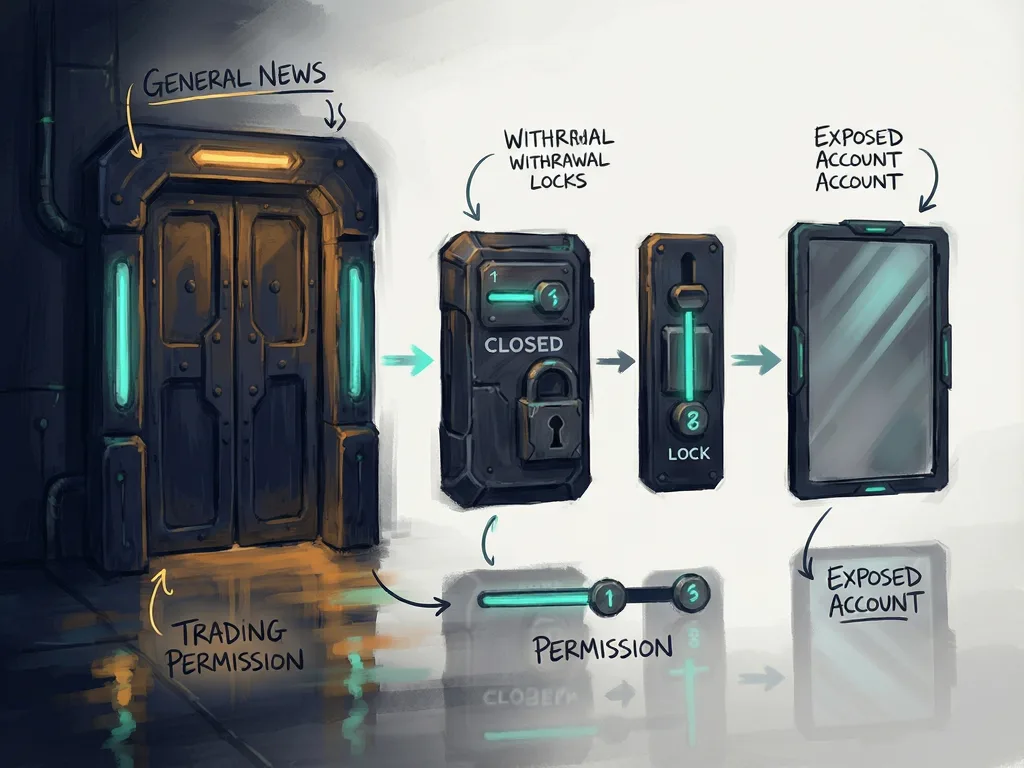
The model separates custody from execution. An investor can keep assets with a custody provider and still access markets through a trading firm.
In the brokerage model Lim described, a hedge fund could send orders to FalconX, and FalconX would execute them using its own exchange accounts and relationships. Investors can keep assets outside an exchange while receiving credited balances that allow them to trade on it. Lim said that for many players, facing a regulated entity like FalconX is more palatable.
The setup does not remove all risk. Investors still face risks tied to the firms holding their assets and settling their trades. Outside custody may reduce direct exchange exposure, but it places more importance on the custody provider and the trading intermediary.
What the Bitcoin withdrawal data shows
Binance saw large Bitcoin outflows in mid-November, although it is not clear whether they were linked to the hack. CryptoQuant data showed net withdrawals of about 2,771 Bitcoin (BTC) on Friday, then 2,708 BTC on Saturday and 5,636 BTC on Sunday. Across those three days, about 11,115 BTC more left Binance than entered. CryptoQuant also tracked Bitcoin netflows on Binance from Oct. 1 to Nov. 16.
The outflows came as the broader crypto market fell. CoinGecko showed Bitcoin trading around $65,000 at 9:41 pm UTC Monday, down about 20% over the past month.
The data does not identify who moved the Bitcoin or why. Funds could have gone to personal wallets, companies that store crypto on behalf of investors, or other exchanges.
What institutional crypto trading could look like in 2027
Security concerns are not the only change Lim expects. He also expects large investors to seek different trading arrangements in 2027. He said institutions want more access to assets such as oil, gold and stock market indexes through crypto platforms, including outside normal market hours. The benefit, he said, is speed: "You can respond quickly to news events when they happen," citing one of the benefits of 24/7 trading.
This kind of trading is already visible on Hyperliquid, a decentralized trading platform that offers contracts tied to traditional assets. Perpys data showed that, as of Monday, Hyperliquid's markets for traditional assets and other contracts had about $4.3 billion in open interest and $3.9 billion in trading volume over 24 hours.
But while crypto platforms are giving investors more ways to trade, Lim said the financial services needed to support those trades have not kept up, particularly borrowing money and managing risk. For example, investors can now trade oil through traditional futures markets, investment funds and crypto platforms. But lenders may treat trades on each platform separately, even when those trades balance each other out.
"There's not enough players that can give you leverage or margin financing against all of these things collectively," Lim said. "The risk netting is not quite there yet."
Other context mentioned in the source
The source also referenced related coverage: "Crypto hack losses equal 57 cents per $1 earned onchain: Ark's Valente" and "THORChain founder rejects freeze request, CZ thanks Secret Service: Hodler's Digest."
This article is an informational summary, not investment advice.
crypto custodyBinance hackinstitutional investorsexternal custodybroker execution
Related reading

Comments 0
Never post a seed phrase, private key or screenshot of your wallet in the comments.
- No comments yet.