
Binance hired Mandiant, SlowMist, and Verichains 25 days after the $6,000,000,000 breach.
Binance hired Mandiant, SlowMist, and Verichains 25 days after a $6,000,000,000 theft, but omitted scope, deadline, budget, publication details.
What Binance announced
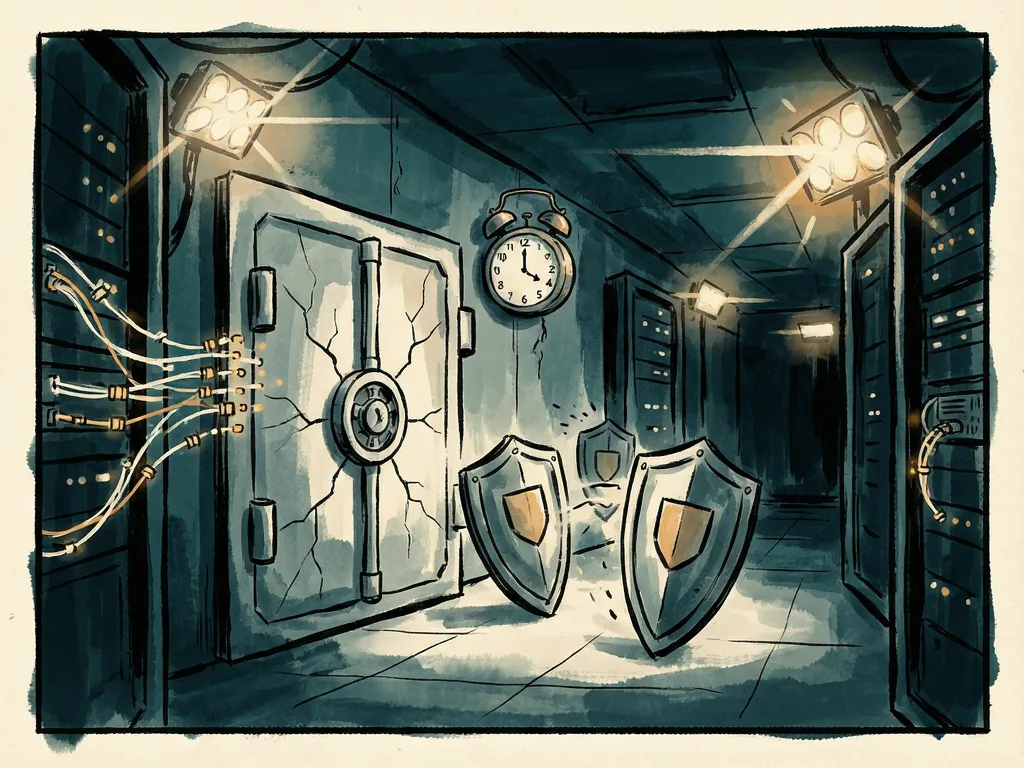
On 23 November 2026, Binance said it had engaged three outside security firms — Mandiant, SlowMist and Verichains — to conduct "comprehensive, independent reviews" of its security procedures. In the release, Binance said the work will "validate Binance's current security infrastructure and assess its security posture going forward."
The announcement includes the names of the firms, descriptions of their credentials, and statements from executives. It does not include a scope, a deadline, a budget, a reporting line, or a commitment to publish the reviews' conclusions.
Why the timing matters
The statement came 25 days after an intrusion on or about 29 October. In that case, the U.S. Justice Department says more than $6 billion in crypto was taken from the exchange, and it attributes the intrusion to North Korean actors.
Binance's release does not mention the theft and does not say whether the reviews were prompted by it. That separation is important for readers because the reviews are described as forward-looking work on security infrastructure, while the theft has already generated separate legal and recovery actions.
What each firm is known for
Mandiant is described in Binance's release as part of Google Cloud and as one of the world's foremost incident response and threat intelligence firms, with more than two decades of frontline experience investigating nation-state and advanced cyber attacks. That profile is associated with reconstructing an intrusion and understanding who carried it out.
SlowMist is presented as a threat intelligence firm specializing in blockchain ecosystem security, established in 2018 and built on more than a decade of network security experience. Its typical work includes tracking the movement of stolen assets, mapping wallet clusters and identifying laundering routes after a breach.
Verichains is described as combining advanced research and deep offensive insight with a track record of investigating and mitigating some of the largest incidents in Web3. That description points toward code and infrastructure review rather than asset tracing.
The three engagements therefore cover three broad questions: how an intrusion happened, where assets went, and whether failed systems can be rebuilt to resist a repeat. Binance does not say in the release which firm is assigned which question, or whether any firm can review the others' findings.
What the executives said
Binance's public statement attributed to Binance (@binance) on 23 November 2026 says: "Binance has engaged leading security firms Mandiant, SlowMist and Verichains for independent reviews of our security procedures. The security of our users' assets is our first responsibility. We're committed to acting on what they find. These reviews will validate our current security infrastructure, assess our security posture going forward, and help strengthen the protections people expect from our platform."
Jimmy Su, Binance's chief security officer, said: "We have engaged three of the most respected firms in the field to independently review our security procedures. They will review our systems and tell us where we can be stronger. We are committed to acting on what they find."
Richard Teng, identified in the release as co-CEO of Binance, said: "The security of our users' assets is our first responsibility. Independent review by world-class experts is how we hold ourselves to the highest standard. We take that responsibility seriously."
The two outside executives quoted were more specific about method. 23pds, partner and chief information security officer at SlowMist, said: "Security is an ongoing effort. Independent reviews can help organizations test their controls, identify gaps and strengthen resilience." Thanh Nguyen, chief executive of Verichains, said: "You cannot out-patch AI-powered attackers, so the industry must shift from patching vulnerabilities faster to designing systems where attacks fail."
What the announcement does not specify
The executives describe a process that will produce findings. The release does not describe what happens to those findings. It does not say whether there will be a written report, which board or committee will receive it, whether a regulator will be shown it, or whether customers will learn the results.
This distinction matters. "Committed to acting on what they find" describes intended conduct. It is not the same as a disclosure commitment. For readers, the open question is whether the reviews will remain internal work or become public evidence that can be checked.
What the Justice Department reported about recovery
In a separate release on the same day, the U.S. Justice Department said it had moved to forfeit over $1.1 billion in USDC tied to the intrusion. It also said the United States had "assisted in the freezing, seizing, and/or the return of over $2.9 billion worth of cryptocurrency from multiple sources since the theft from Binance on or about Oct. 29."
The release named two law enforcement officials describing the response. Brett Leatherman, operations director of the FBI's Cyber Branch, said the bureau and its partners "moved quickly to trace and freeze stolen assets and share critical information with virtual asset service providers." Todd Bratz, special agent in charge at the Secret Service's criminal investigations division, said: "Secret Service investigators worked with precision to identify and freeze stolen funds within minutes of the hack."
The Justice Department account describes external tracing and freezing as the immediate effective response after the theft, executed by agencies working with issuers and exchanges. The reviews Binance has commissioned are different: they are prospective reviews of security controls, not a public accounting of the recovery work.
How the public numbers compare
Binance's release does not provide figures for the theft or recovery. The available public figures come from the Justice Department. If more than $6 billion was taken and more than $2.9 billion has been frozen, seized or returned, roughly $3.1 billion, or about 52% of the loss, has not been accounted for publicly. The over $1.1 billion forfeiture action covers roughly 18% of the total.
These figures describe assets, not customer outcomes. The Justice Department's language is about assisting recovery. It does not state that any user has been made whole. The forfeiture complaint filed the same day asks a judge to take ownership of the stablecoins themselves, which is a separate process from compensating account holders.
Market data did not show a large move around the announcement. According to CoinGecko, BNB traded at $557.02 at 00:55 Coordinated Universal Time on 24 November, down 0.3% over 24 hours, against a market capitalization of $73.25 billion. The outstanding $3.1 billion is equivalent to roughly 4.2% of that valuation. A single day's price change does not establish how traders view a security review, but it shows that the disclosure did not move the token's value in any measurable way in that snapshot.
What Binance has published since the breach
During the same period, Binance has made several public updates. It restored withdrawals in stages and published a proof-of-reserves disclosure covering the assets it holds, following the breach in early November. A proof-of-reserves disclosure is meant to show balances held by an exchange; it does not by itself show whether the intrusion path has been closed.
That distinction is central to the new security reviews. The reviews are meant to address the controls and systems around the intrusion, while the reserve disclosures address balances after the event.
What institutional counterparties may look for next
For institutions that custody assets on Binance, clear through the exchange, or lend against positions there, an independent review is most useful when it produces something they can read and audit. A typical diligence chain runs from an engagement letter to a scope document, then to findings, and finally to a remediation plan with dates.
Binance's announcement supplies the engagement element and points to future action. It does not specify the scope document, the form of findings, or a remediation schedule that outside parties can check. A review commissioned by the company being reviewed can still be rigorous. For it to function as third-party assurance, the scope usually needs to be defined in advance, findings need to be summarized for outside readers, and someone outside the company needs to confirm that remediation happened.
Nothing in the release says Binance has ruled out publishing such material. It simply does not say. For a business that says it serves more than 330 million users across 100-plus countries, and that has spent the past three weeks publishing reserve data to steady confidence, the lack of publication details matters to users and counterparties.
How the review differs from the forfeiture case
The security reviews do not resolve the legal exposure tied to the stolen assets. The forfeiture action is a civil proceeding against assets, investigated by the FBI, the Secret Service and IRS Criminal Investigation, with Circle Internet Financial providing assistance. It will proceed on its own calendar, and its findings are expected to appear in court filings rather than in a press release.
The reviews also do not settle how much of the loss the exchange's own controls should have prevented. That question can be tested in filings and in policy argument, not inside a security audit. A private review may inform internal decisions, but it does not create public evidence that outside parties can verify.
What would count as public evidence
Three types of output would move this announcement toward verifiable evidence.
First, a published scope that names the systems under review and the period covered. Second, a date, even an approximate one, for completion. Third, a form of output that a third party can inspect, such as a summary report, an attestation from one of the three firms, or a description of remediated controls specific enough to be checked.
The firms were engaged on 23 November. If the reviews conclude without a public trace, users and counterparties will still have limited public information about the findings. The available public record will remain the same basic set of facts: a very large loss, a partial recovery led by law enforcement, and three firms hired for reviews whose results have not yet been made public.
Frequently asked questions
Which firms are conducting the reviews?
Mandiant, which the release describes as part of Google Cloud; SlowMist, a blockchain threat-intelligence firm established in 2018; and Verichains, a Web3 security firm. Binance said all three will conduct independent reviews of its security procedures.
Did Binance say the reviews were prompted by the theft?
No. The release does not mention the theft. It was issued 25 days after the intrusion of 29 October that the Justice Department says took more than $6 billion, but it gives no reason for the timing and no link between the two events.
What details about the reviews are missing?
No deadline, budget or scope document appears in the announcement. Binance said the reviews will validate its infrastructure and assess its security posture, and that it is committed to acting on what the firms find. It made no commitment to publish the findings.
How much of the stolen crypto has been frozen, seized or returned?
The Justice Department said the United States had helped freeze, seize or return more than $2.9 billion since the theft of more than $6 billion. It also said it had moved to forfeit over $1.1 billion in USDC tied to the intrusion.
Did the announcement move BNB?
According to CoinGecko, BNB traded at $557.02 at 00:55 Coordinated Universal Time on 24 November, down 0.3% over 24 hours, with a market capitalization of $73.25 billion. The disclosure did not produce a measurable price move in that snapshot.
Crypto SecurityBinanceSecurity ReviewIncident ResponseNorth Korea
Related reading
Comments 0
Never post a seed phrase, private key or screenshot of your wallet in the comments.
- No comments yet.