
Solana Draws Increased Attention as Prime Revenue Targets $300 Billion.
Prime Revenue says $300 billion in annual trade finance payments may move onchain to Solana, boosting settlement efficiency and transparency.
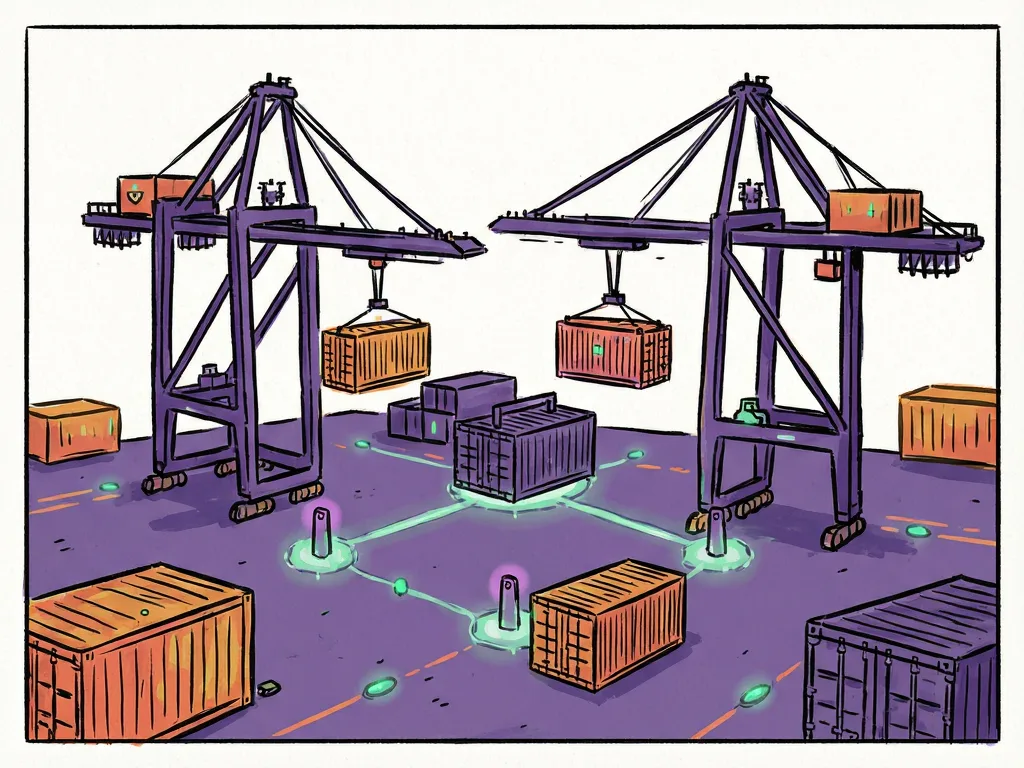
What Prime Revenue and Solana Are Planning
Prime Revenue’s CEO, @pjbain, highlighted the potential for Solana to reshape trade finance during a recent event. He said approximately $300 billion in annual payment transactions are poised to transition onchain via Solana. The statement places a large, recurring payment flow at the center of a possible shift toward blockchain-based financial infrastructure.
The original Coinfomania report pointed readers to SolanaFloor’s tweet for more details.
Why the $300 Billion Figure Matters
The number matters because it connects blockchain capacity to a core financial process: trade finance. If approximately $300 billion in annual payment transactions move onto a network like Solana, the impact could extend beyond crypto market speculation and touch real financial services operations.
The source describes this as a notable evolution in the financial landscape, with the potential to enhance efficiency and transparency in trade finance processes. That framing suggests the story is not only about transaction volume, but also about how payment and settlement workflows may be recorded, verified, and executed in the future.
What “Onchain” Means for Trade Finance
In this context, “onchain” means that payment-related transactions or settlement activity are handled on a blockchain network rather than remaining only in traditional private systems. For trade finance, that could involve making transaction records and settlement flows more traceable and easier to verify.
The source does not claim that all existing processes will disappear. Instead, it presents the move as a way to improve transaction processes in trade finance by using blockchain infrastructure.
Why Solana Is Part of the Conversation
Solana is described as a high-performance blockchain platform designed for decentralized applications and crypto projects. In the broader crypto market, the source says momentum is mixed, with varied performance among major assets. Solana, however, has captured attention due to its capacity to facilitate large-scale transactions efficiently.
Prime Revenue is described as operating in the financial technology sector, with a focus on improving transaction processes in trade finance. Its partnership with Solana aims to use blockchain to enhance the speed and security of these transactions.
The practical question is whether a high-performance blockchain can support large, recurring payment activity at a scale that traditional financial participants may find useful.
What This Could Change
The source says this development could catalyze increased adoption of blockchain technology in traditional finance. If approximately $300 billion in annual payment transactions are integrated on Solana, it could signal a broader shift in how financial services may be conducted.
For readers following crypto, payments, or enterprise blockchain, the key implication is that trade finance may become a meaningful real-world use case. The value would depend on whether blockchain can deliver faster settlement, clearer transaction records, and stronger operational confidence compared with existing systems.
The source also notes that Solana’s focus on large-scale transaction capacity could lead to increased adoption and usage of its network if trade finance integrations gain traction.
What Traders and Market Participants Should Watch
The source recommends that traders and market participants closely monitor Solana’s developments in the trade finance sector. Key things to watch include the platform’s performance metrics and any new partnerships that emerge from this focus on onchain solutions.
The broader story is whether the stated target of moving approximately $300 billion in annual payment transactions onto Solana becomes visible through real adoption, measurable network usage, or expanded business relationships.
Risks and Uncertainties
The source says risks remain significant, including regulatory scrutiny and market fluctuations. Stakeholders should prepare for possible volatility as these changes unfold.
For readers, that means the announcement should be treated as a directional signal rather than a guaranteed outcome. The event statement outlines an ambition, but the practical result will depend on execution, market conditions, and whether financial services participants choose to move meaningful transaction volume onto blockchain infrastructure.
What This Means for Readers
Prime Revenue’s CEO, @pjbain, has positioned Solana as a possible backbone for a large trade finance payments transition. The approximately $300 billion figure gives the discussion scale, while the focus on efficiency, transparency, speed, and security gives it a practical purpose.
The article is not simply about another crypto partnership. It is about whether a high-performance blockchain platform can support a serious, recurring financial workflow. If it does, the story could become relevant not only to crypto investors, but also to anyone tracking the future of payments, financial infrastructure, and traditional finance.
blockchainSolanatrade financePrime Revenueonchain
Related reading



Comments 0
Never post a seed phrase, private key or screenshot of your wallet in the comments.
- No comments yet.