
South Korean cryptocurrency exchanges have halted transfers of Cyber tokens amid a suspected bridge exploit.
Upbit and Bithumb paused CYBER transfers after a suspected bridge exploit; trading continues while Cyber investigates.
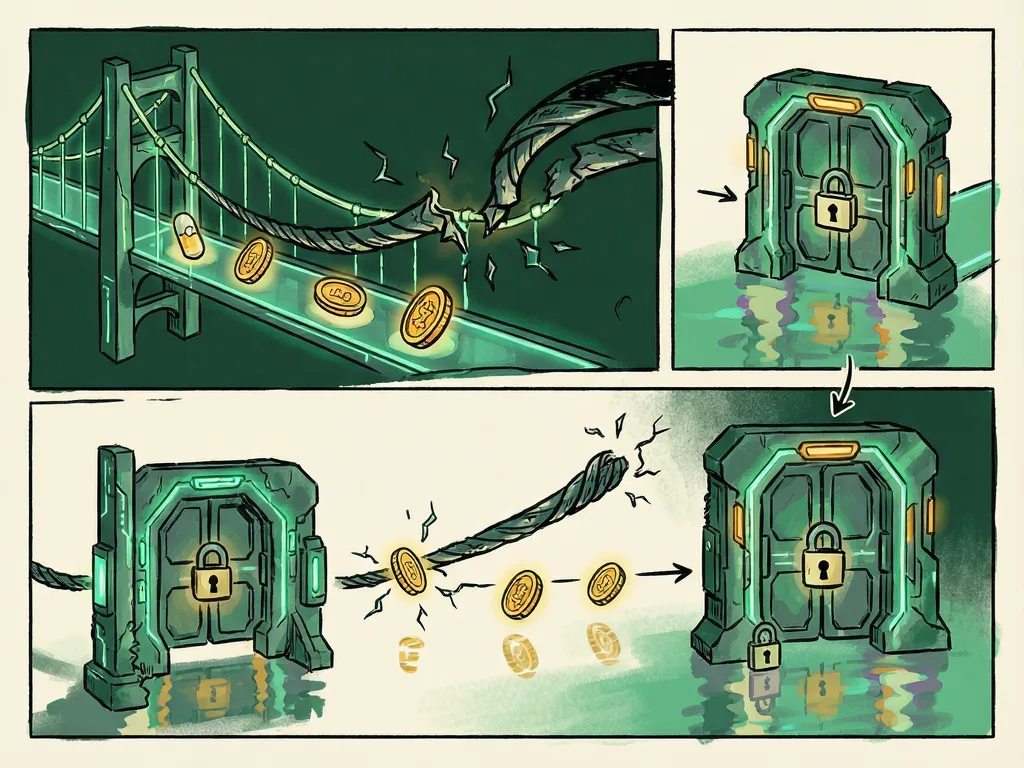
What changed for CYBER holders on South Korean exchanges
Upbit and Bithumb, two South Korean crypto exchanges, suspended deposits and withdrawals of CYBER after the project reported suspicious activity involving its cross-chain bridge. On Sunday, Bithumb announced it would suspend deposits and withdrawals because of suspected security issues. The exchange said trading will continue, while transfers would resume once network stability was assured. Upbit also announced a temporary suspension of CYBER deposits and withdrawals.
A deposit means sending tokens into an exchange account, while a withdrawal means sending them out. When both are suspended, the main transfer paths for that token are on hold. Bithumb's notice distinguishes this from trading on its own platform, which it said would continue.
What Cyber reported about the bridge
The report came from Cyber, formerly CyberConnect, which operates an Ethereum layer-2 network designed for social applications. On Saturday, Cyber said it detected unexpected minting of CYBER tokens on Solana, followed by a transfer of tokens out of its bridge's Ethereum lockbox.
A cross-chain bridge connects different blockchains so assets can move between them. In many bridge designs, tokens are locked on one chain while equivalent tokens are issued or recognized on another. Unexpected minting suggests token creation outside the normal controls. The Ethereum lockbox is the Ethereum-side location tied to the bridge's locking mechanism. Cyber said it was investigating the incident and assessing which assets and bridge routes were affected. It advised users to avoid using the bridge or depositing CYBER to exchanges while the investigation continues.
Why exchanges may pause transfers before a confirmed breach
The suspensions came days after South Korea's Financial Services Commission announced plans to allow exchanges to halt deposits and withdrawals when hacking is suspected, rather than waiting for a confirmed breach. That policy context gives exchanges a clearer basis to act early when security signals are concerning.
In general, a bridge or token-minting system may need to be isolated before the full impact of suspicious activity is known. Pausing deposits and withdrawals can reduce the chance that an exchange accepts or processes assets whose status is unclear during the investigation.
Other recent cases involving South Korean exchanges and bridge risk
This is not the only recent South Korean exchange suspension tied to security concerns. Earlier in November, South Korean exchange GOPAX also suspended trading, deposits and standard withdrawals after receiving a hacking threat, despite saying no breach had occurred.
A related story noted alongside the CYBER report says Chainflip confirms a $12 million hack and offers the attacker a 10% bounty. That case was separate from the CYBER bridge report, but it shows why exchanges and projects may move quickly when bridge infrastructure or token flows appear suspicious.
What readers can watch next
For CYBER holders, the immediate effect is that Upbit and Bithumb have paused CYBER deposits and withdrawals. Bithumb has said trading will continue and transfers would resume once network stability was assured. Cyber has said it is investigating the unexpected Solana minting and the transfer out of its Ethereum lockbox, and it has told users to avoid the bridge and CYBER deposits while the assessment continues.
The next key information will be Cyber's findings on affected assets and bridge routes, exchange notices about when transfers may resume, and whether more detail is provided on the suspected security issue.
UpbitCYBER tokenbridge exploitBithumbSouth Korea crypto
Related reading


Comments 0
Never post a seed phrase, private key or screenshot of your wallet in the comments.
- No comments yet.