
Binance.US perpetual contracts passed the Commodity Futures Trading Commission’s first checkpoint, and its own filing points to March 2027.
Binance.US passed a US futures regulator completeness step for perpetual contracts, but filings point to March 2027 clearing and May 2027 review.
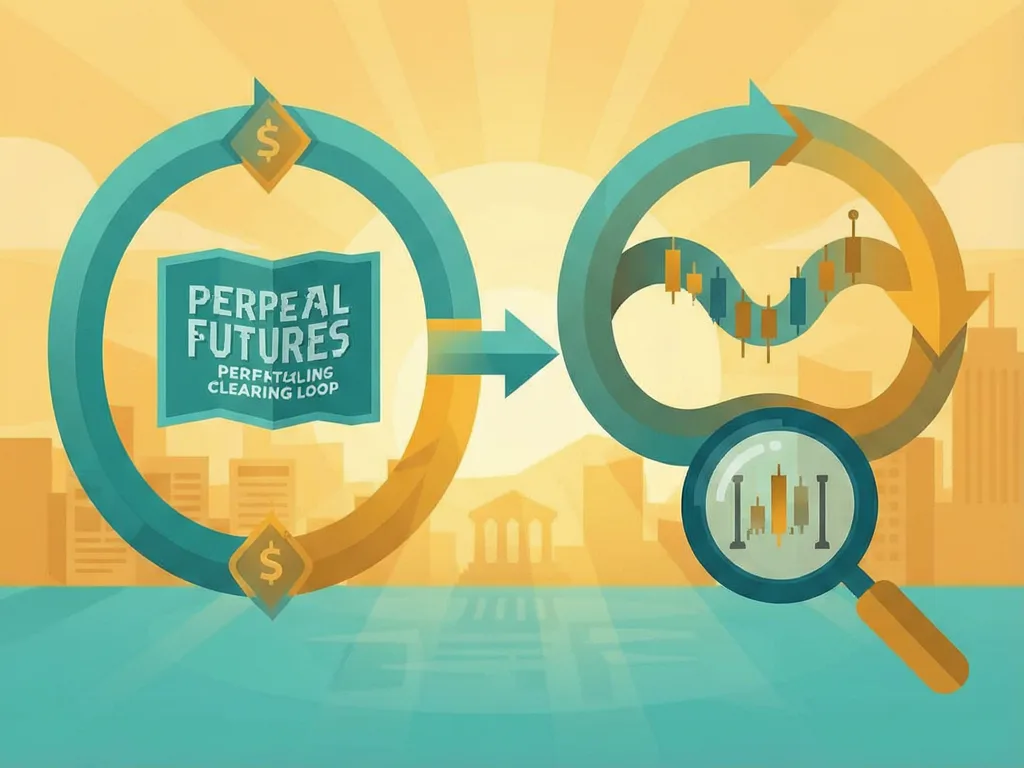
Binance.US has moved past the first procedural review step for a US perpetual futures offering, but the filings attached to that step describe a longer runway than the announcement suggests. In a 19 November statement, the exchange said the Commodity Futures Trading Commission had judged its applications to register as a designated contract market and a derivatives clearing organization to be “materially complete.” The exchange also said the designated contract market application is now posted on the regulator’s website.
The Commodity Futures Trading Commission’s filings database gives the precise status. BAM Derivatives LLC’s contract market application is listed as “Pending,” with a filing date of 19 November 2026. BAM Clearing LLC’s derivatives clearing organization application is older: it entered the register on 21 September, 60 days before the statement, and still reads “Pending Registration.” Both documents are public. Neither has been granted.
For readers, the key dates are not the announcement date. They are March 2027, the clearing start date the company expects in its own filing, and 18 May 2027, the end of the normal 180-day review window for the designated contract market application. Neither date guarantees that a perpetual futures contract will begin trading.
What the regulator has actually confirmed so far
“Materially complete” is a term of art in the Commodity Futures Trading Commission’s designation process. Under Title 17, Code of Federal Regulations, section 38.3, staff compare a designated contract market application with the core principles set out in section 5(d) of the Commodity Exchange Act. The Commission’s Division of Market Oversight has delegated authority to tell an applicant that its submission is materially incomplete. A finding of material completeness is the opposite of that warning: it means the file is sufficient for substantive review.
Binance.US said the determination means the Commodity Futures Trading Commission has confirmed that the application contains the information needed for substantive review. It is not an approval.
The same regulation also sets a deadline. Section 38.3 says the Commission will review the application under the 180-day timeframe and procedures in section 6(a) of the Commodity Exchange Act. Starting from the 19 November filing date, 180 days ends on 18 May 2027. During that period, the Commission may approve, deny, or designate the applicant subject to conditions.
Katerina DiCostanzo, the general manager for designated contract market and derivatives clearing organization matters at Binance.US, described the finding as a step in a process rather than a final result. She said reaching material completeness came from a rigorous and collaborative process with Commission staff and thanked the staff for their engagement.
The contract terms Binance.US has put on paper
Because the designated contract market exhibit is published, the proposed instruments can be examined directly. The exhibit list includes a 70-page exchange rulebook. That rulebook names two products: a perpetual bitcoin contract with a unit of 0.01 BTC, or one hundredth of a bitcoin, and a perpetual ether contract with a unit of 0.1 ETH, or one tenth of an ether. The filing also contains a core-principles mapping that runs to dozens of pages.
Rule 11.3 sets the bitcoin perpetual at a notional of 0.01 BTC, a minimum price increment of one cent, a position limit of 2,000,000 contracts, and a reportable level of 25 contracts. Rule 11.4 applies the same limits to the 0.1 ETH contract.
Using CoinGecko prices of $59,030.00 for bitcoin and $1,620.39 for ether at 22:26 Coordinated Universal Time on 20 November, one bitcoin contract has about $590 of notional value. One ether contract has about $162.
The position limit is the more consequential number. A 2,000,000-contract cap equals 20,000 bitcoin, or roughly $1.18 billion at the same bitcoin quote. For ether, the cap equals 200,000 ETH, about $324 million. The reportable level of 25 contracts equals 0.25 BTC, or roughly $14,758, a threshold that points toward monitoring retail-size accounts rather than large block trades.
The proposed settlement design also differs from offshore perpetual products familiar to many traders. Rule 11.2 provides for continuous listing, with no expiry and no final settlement date. Rule 11.3 requires settlement at least once each business day at 5 p.m. New York time. Under Rule 6.2, funding is calculated over standard eight-hour intervals ending at 12:00 a.m., 8:00 a.m. and 4:00 p.m. Central time. The transfer amount equals the funding rate multiplied by the contract’s fair market price and trading unit. When the funding rate is positive, longs pay shorts; when it is negative, the payments reverse.
Two gaps in the rulebook are more telling than the listed terms. Chapter 6 covers clearing and settlement, and the next chapter is printed as “Chapter 7: [RESERVED]” before the document moves to discipline and enforcement. The exchange rulebook contains no chapter on margin requirements. Instead, the definitions section points to the clearinghouse, defined as BAM Clearing LLC, for that framework.
Why the clearing subsidiary is the timing bottleneck
The Commodity Futures Trading Commission maintains a register of derivatives clearing organizations. Each entry shows a status and a one-line description of permitted activity. Read on 20 November, the register lists 60 organizations. Thirty are registered. Nine, including BAM Clearing, are pending registration. The others are dormant, exempt or vacated.
BAM Clearing has been pending since 21 September. Its application package includes a proposed clearing rulebook, a regulatory compliance chart, and a summary of clearing activities. The summary lays out the sequence that must occur before clearing can start. Clearing begins only after the Commission registers the derivatives clearing organization, the affiliated exchange obtains authority to operate as a designated contract market and list the initial contracts, systems and production-readiness testing are complete, clearing-member and settlement-bank arrangements are in place, and the contracts satisfy their own filing or approval requirements.
The company’s own target is written after those conditions. The filing says the applicant currently anticipates launching clearing services in March 2027, while noting that the exact start date depends on regulatory approval and completion of operational readiness activities.
The planned clearing scope is narrow. It covers two cash-settled, dollar-denominated perpetual contracts: BTCUSD_PERP and ETHUSD_PERP. The filing excludes swaps, bilaterally negotiated trades, clearing for unaffiliated venues, and direct customer access. Each customer position would sit behind a clearing member registered as a futures commission merchant.
That structure separates the proposed US product from the offshore venue it borrows its name from. Offshore perpetual venues let traders post collateral directly against a position and rely on an automated engine to liquidate positions. The BAM design inserts a futures commission merchant between the trader and the clearer. That is the standard onshore chain, and it helps explain why US perpetual futures have historically arrived later and cost more to operate.
Why the word margin is still the missing piece
The register’s description column contains the practical question. Among the 30 registered clearinghouses, only 2 have a remark permitting them to clear margined futures: TLD Clearing, Inc., doing business as Backpack Clearing, registered 13 November 2026, and NADEX, doing business as Crypto.com Derivatives North America, registered in February 2004. The other 28 are described as permitted to clear fully collateralized futures, options on futures and swaps.
That difference changes how the product behaves. A fully collateralized clearer requires the full value of a position to be funded before the position exists. A margined clearer accepts only a fraction of the contract value and collects variation margin as the position moves. That margin mechanism is what creates leverage and liquidation risk. Backpack’s approval on 13 November, followed by an exchange designation, made it the first new entrant in more than two decades to receive that wording.
Neither the Binance.US release nor the published designated contract market exhibit says which permission BAM Clearing has requested. The Exhibit A-3 language appears to assume margin exists: it lists “Margin, Variation Margin settlement, Funding Amounts” among the obligations a clearing member owes the clearer. But the register remark that would confirm the permission appears only when the Commission issues an order, and no such order has been published.
Any count from the register needs two cautions. The remarks are staff summaries, not the operative text of each registration order, so a blank or narrow description does not prove that a clearer cannot take margin under another authority. The register is also a snapshot. It changed twice in the week before this article, with Backpack’s entry on 13 November and the designated contract market designation that followed.
Why March 2027 is a target, not a start date
The two filing timelines create the scheduling problem. The designated contract market application was filed on 19 November. Section 6(a) of the Commodity Exchange Act gives the Commission 180 days, ending on 18 May 2027 unless it acts sooner. Binance.US’s own clearing filing targets March 2027, roughly two months before that statutory window closes.
For March 2027 to hold, three decisions must arrive early: a derivatives clearing organization registration order from the Commission, a designated contract market designation order, and clearance of the initial contract filings. The filing recognizes those dependencies by listing them as preconditions. A company target date is a plan, not a commitment accepted by the regulator, and the Commission is not required to act before its deadline.
The clearing permission also affects what the product would be. If BAM Clearing is registered with the fully collateralized wording carried by 28 of the 30 registered clearers, the launched product would require full funding of each position. That would be a usable instrument, but it would not be the leveraged perpetual product sold on offshore venues. It would not compete on the same terms with products US traders already access through offshore accounts.
What the filing means for traders and Binance.US’s comeback
Binance.US is entering a queue that moved quickly this autumn. Coinbase Clearing registered on 28 September, tZERO’s clearing arm on 16 October, XV Clearing on 29 October, and Sporttrade’s clearer on 16 October. All were described with fully collateralized wording. Backpack’s group went further by pairing a margined clearer with an exchange designation in the same week.
Binance.US brings a different kind of asset: a consumer brand with a US history that most of those entrants lack, plus a stated ambition to rebuild market share after the 2023 enforcement cycle. When the exchange outlined its comeback plan in July, management pointed to a 20% market-share target. Derivatives represent the part of that plan with the largest revenue pool and the highest regulatory barrier.
Chief executive Stephen Gregory framed the filing as a response to customer demand rather than a product roadmap. He said customers have asked for access to regulated crypto derivatives, including perpetual futures, on a platform they already trust. The company also said it does not yet offer derivatives products and will not offer them unless and until the Commodity Futures Trading Commission grants the required registrations.
The market backdrop has not made waiting cheaper. CoinGecko quotes at the same timestamp showed bitcoin down 14.4% over seven days and ether down 16.9%, a drawdown that has thinned the volumes.
BTCETHBinance.USPerpetual futuresCommodity Futures Trading Commission
Related reading

Comments 0
Never post a seed phrase, private key or screenshot of your wallet in the comments.
- No comments yet.