
Jeff Walton explains why a one-trillion-dollar AI credit complex could become the next catalyst for Bitcoin.
The episode asks if AI credit stress and Anthropic IPO could shift capital to Bitcoin, alongside treasury pullbacks and digital credit caution.
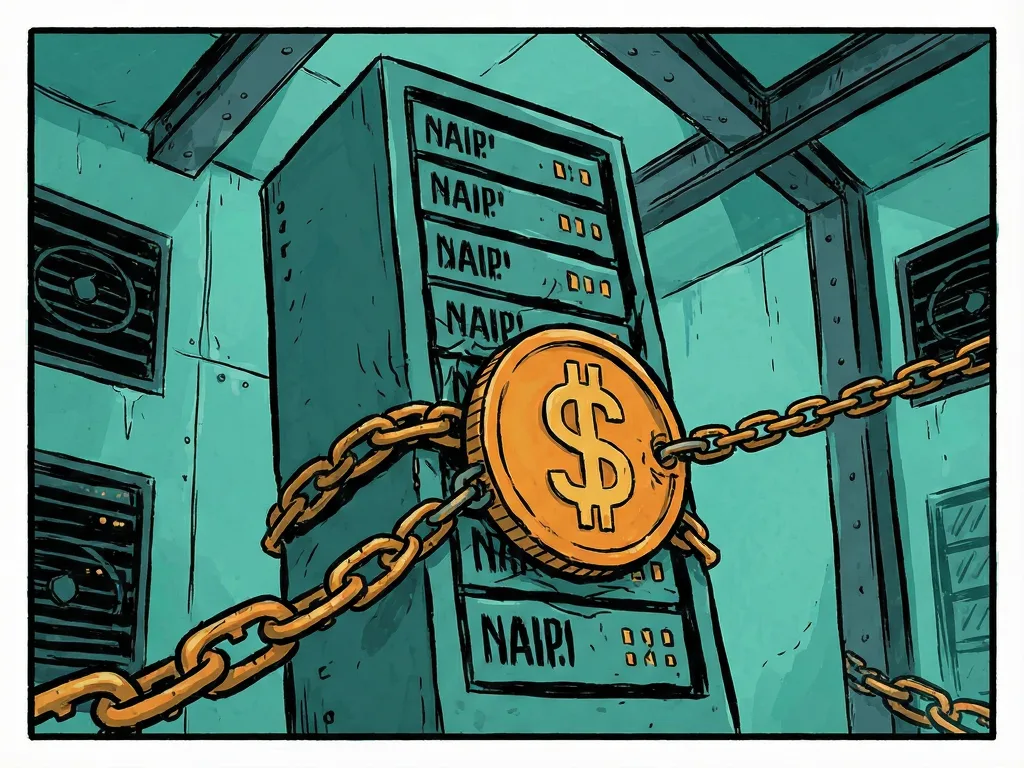
What the source page is
The source is a Bitcoin Magazine BMTV episode page centered on Jeff Walton. The episode title asks why a $1 trillion AI Credit Complex could be Bitcoin’s next catalyst. The page says the post was written by Patrick Green. It also says the episode is sponsored by Bitkey.
The sponsor notice gives a promo code BMTV, a 10% discount, and the second-generation Bitkey. It points to https://bitkey.world/BMTV. The page also includes partnership enquiries: BMTV offers customized sponsorships tailored to a brand’s goals and target audience, with the partner link https://bitcoinmagazine.com/bmtv.
Why the AI credit question matters
A credit complex is a broad system of borrowing, lending, and financing instruments. The episode uses the phrase $1 trillion AI Credit Complex to ask whether a large pool of AI-related financing can affect markets. It does not state a result. It frames the issue as a possible catalyst for Bitcoin.
For a reader, the question is how one market’s stress can move capital elsewhere. The chapter at 00:34 describes a very disruptive period in capital markets. The chapter at 02:15 describes credit market stress and widening spreads. A spread is the difference between two yields. When spreads widen, investors often demand more compensation for risk. That can make some assets look less attractive and others look like alternatives.
Bitcoin treasury companies and the pullback
The episode begins at 00:00 with Bitcoin treasury companies and the pullback. A pullback is a decline after a rise. The source does not give a figure for the decline. The chapter suggests that pressure on Bitcoin treasury companies is part of the market backdrop before the AI credit discussion.
This matters because Bitcoin treasury companies are connected to Bitcoin exposure. If their financing, share prices, or risk appetite change, the episode may consider whether Bitcoin’s relationship to capital markets changes too. The source presents this as a theme, not a conclusion.
Anthropic’s IPO and the money coming out
At 01:07, the episode turns to Anthropic’s IPO and the money coming out. An IPO can draw public capital toward a company that was previously private. The phrase “the money coming out” suggests the discussion focuses on where capital moves when a large AI company becomes public.
At 03:02, the episode asks whether Anthropic is the pin to pop the AI bubble. A bubble is a market condition where prices may run ahead of fundamentals. The source does not say Anthropic will pop a bubble. It asks whether the IPO could be a stress point. That question matters because AI financing, equity markets, and credit markets can influence each other.
Does Bitcoin need the AI music to stop?
At 05:18, the episode asks whether Bitcoin needs the AI music to stop. This asks whether Bitcoin’s next move may depend on AI enthusiasm cooling. The source does not answer yes or no.
At 06:58, the episode includes AI, new jobs and an optimistic future. That chapter adds a counterweight: AI may create new work and optimism even while credit concerns are discussed. The episode therefore contains two views of AI: one as a possible source of stress, and one as a possible source of optimism.
Why credit managers avoid digital credit
At 08:03, the episode discusses why credit managers avoid digital credit. Digital credit can refer to credit connected to digital assets, platforms, or related infrastructure. The source does not define a specific product. The chapter suggests credit managers may avoid it because of unfamiliar structure, unclear risk controls, or terms that do not fit traditional credit mandates.
At 11:07, the episode compares variable rate preferred and fixed rate preferred. In general, preferred can pay a stated return and may rank ahead of common shares. Variable rate preferred has a return that can change, while fixed rate preferred has a stated rate. This comparison matters because credit managers often prefer terms they can evaluate with familiar models. If digital credit lacks that structure, it may be harder to adopt.
Strive’s third-quarter report and uncorrelated yield
At 13:25, the episode moves to Strive’s third-quarter report and what comes next. The source does not give report numbers. The reader should understand this as a pointer to a discussion of performance, expectations, and next steps.
At 14:20, the episode looks for yield uncorrelated to Bitcoin. Uncorrelated means returns do not move in a simple, predictable one-to-one pattern with Bitcoin. For a reader, this matters because uncorrelated yield can be part of a broader portfolio conversation. The source presents it as a search, not as a recommendation.
Coverage days and the final chapter
At 16:26, the final listed chapter connects days of coverage and a Bitcoin bull market. The phrase suggests that media attention and trading attention may influence whether a bull market develops. The source does not give a count of days. The chapter appears to close the episode by returning to Bitcoin market behavior after the AI credit discussion.
What the disclaimer adds
The page includes a disclaimer. It says the views and opinions expressed are those of the participants and do not necessarily reflect the official policy or position of BTC Inc., Bitcoin Magazine, or any affiliated entities. It says the content is provided for informational and educational purposes only. It says the content should not be construed as investment, legal, tax, or accounting advice. It also says nothing in the show constitutes a solicitation, recommendation, endorsement, or offer to buy or sell any securities or financial instruments. Viewers should consult their own advisors before making financial or business decisions.
How to read the whole episode structure
The episode structure can be read as a chain of questions:
- 00:00: Bitcoin treasury companies and a pullback.
- 00:34: a very disruptive period in capital markets.
- 01:07: Anthropic’s IPO and the money coming out.
- 02:15: credit market stress and widening spreads.
- 03:02: whether Anthropic is the pin to pop the AI bubble.
- 05:18: whether Bitcoin needs the AI music to stop.
- 06:58: AI, new jobs and an optimistic future.
- 08:03: why credit managers avoid digital credit.
- 11:07: variable rate versus fixed rate preferred.
- 13:25: Strive’s third-quarter report and what comes next.
- 14:20: looking for yield uncorrelated to Bitcoin.
- 16:26: days of coverage and a Bitcoin bull market.
The chain suggests the episode is asking whether AI credit stress, IPO flows, and preferred or digital credit preferences can shape capital allocation. The $1 trillion AI Credit Complex is the title’s framing device. Bitcoin appears as the possible beneficiary if investors look for yield uncorrelated to Bitcoin or rotate away from crowded AI trades. That is the mechanism the source outlines, not a forecast.
BitcoinAI credit complexAnthropic IPOcredit marketstreasury companies
Related reading

Comments 0
Never post a seed phrase, private key or screenshot of your wallet in the comments.
- No comments yet.