
This article explains what quantum-ready cryptocurrency security means and why it matters.
Quantum-ready crypto security means adopting post-quantum cryptography now to protect Bitcoin, wallets, and networks before future threats emerge.
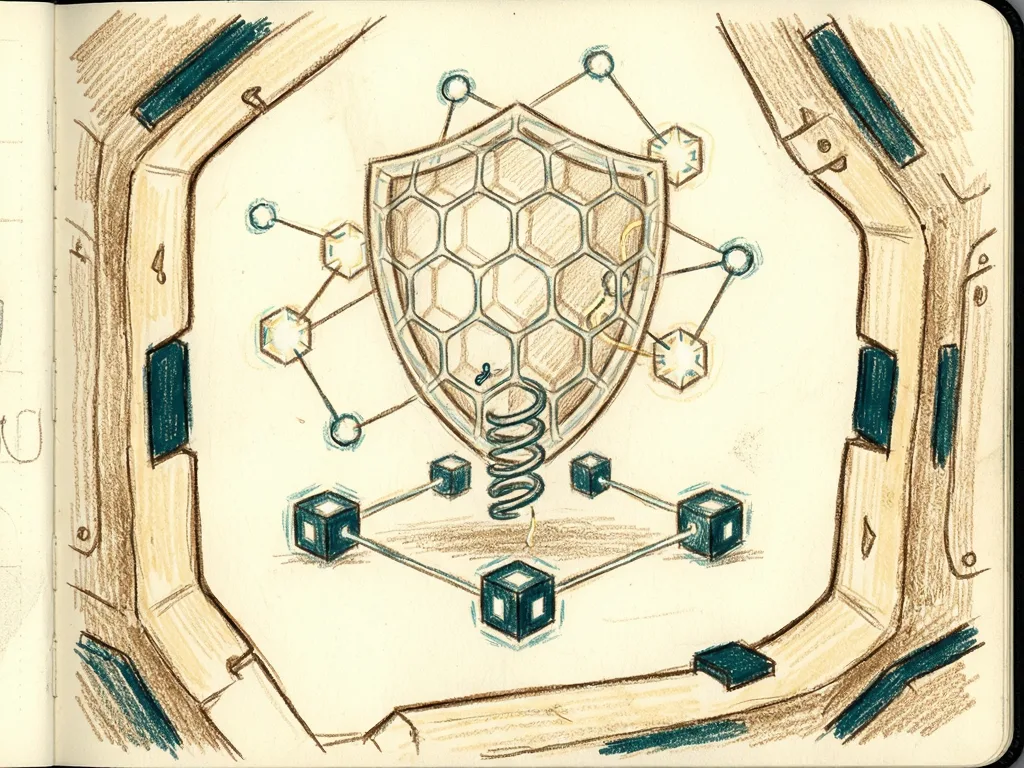
Preparing for quantum computing is now a practical step for Bitcoin and digital security.
What does quantum-ready crypto security mean?
Ten years ago, quantum security sounded like science fiction, something for a later generation to solve. But during a 2017 internship at Cloudflare, the topic was already moving through real research work. One early candidate, the SIDH algorithm, did not survive rigorous community review and was completely broken in 2022. That result was a warning sign: the path to quantum-resistant security is practical, not theoretical, and it requires testing, standards, and upgrades.
The present-day starting point is simple. No machine today can break Bitcoin, cryptographic systems, or cryptocurrencies. But that does not mean waiting is safe. Quantum-ready crypto security means preparing now with post-quantum cryptography, sometimes called PQC, which is designed to withstand the computational power of future quantum computers. These algorithms can run on traditional computers while being built to resist different types of quantum attacks.
Why does it matter before quantum computers can break anything?
Tomas Susanka, Chief Technology Officer at Trezor, says that after years watching the field evolve alongside Trezor’s own work, the conclusion is clear: Bitcoin will need to shift to post-quantum algorithms within the next decade, or sooner. That is not a prediction of immediate failure. It is a statement about the long life of digital assets and the devices that protect them.
Trezor describes security as long-term thinking. Hardware wallets are meant to protect users for decades, not just for a few years. That means understanding tomorrow’s threats and preparing for them today. Trezor says it is proud to lead this shift in crypto security, not because quantum computers pose a danger today, but because they will eventually. Real protection starts before the problem exists.
How is the broader internet already preparing?
Global leaders across many industries are already defending against future quantum threats. Financial institutions, telecommunications operators, technology companies, and internet infrastructure providers are rapidly transitioning to post-quantum cryptography. The reason is that security systems must be updated before an attack becomes practical, not after it becomes practical.
The U.S. National Institute of Standards and Technology, NIST, has been working on standardizing post-quantum cryptography since 2016. Several quantum-resistant algorithms already exist. That makes preparation possible even before powerful quantum computers are widely available.
Outside crypto, the shift is already visible:
Cloudflare says it uses hybrid post-quantum key exchange by default across its network, which handles about 20% of all websites. In October 2025, Cloudflare announced a major milestone: the majority of human-initiated traffic with Cloudflare is using post-quantum encryption.
Apple says it added post-quantum encryption to iMessage in 2024.
Google says it added post-quantum cryptography to Chrome and Android.
Microsoft says it integrated post-quantum cryptography into Windows, Azure, and Microsoft 365.
IBM says it is testing quantum-safe tools for mobile networks.
Amazon Web Services says it offers post-quantum cryptography options for cloud data protection.
Intel says it added post-quantum cryptography support to its software tools in 2025, enabling quantum-safe encryption for cloud applications.
These companies are not reacting to an active threat. They are preparing because they understand that waiting until quantum computers are strong enough to compromise security would be too late.
How does this affect Bitcoin, Ethereum, Solana, and other blockchains?
A common question is: how can a wallet prepare for quantum threats when blockchains themselves are not quantum secure yet? The answer is that quantum readiness in crypto has two layers.
The first layer is the blockchain itself, including Bitcoin, Ethereum, Solana, and other networks. The second layer is the wallet that secures your private keys. Both layers will eventually need to adopt post-quantum cryptography.
Wallets can implement post-quantum cryptography for internal operations now, using algorithms that are independent of the algorithms later adopted by blockchains. Once blockchains upgrade, wallets must also support the same algorithms to remain compatible. Updating blockchains is a long, collaborative effort among global communities and developers. But a wallet’s internal security operations can already be strengthened today.
Trezor says it focuses on what it can control: the security of the device itself. That is why the Trezor Safe 7 was built from the ground up with post-quantum protection.
What can a hardware wallet do before blockchains change?
A hardware wallet’s most critical security operations depend on cryptography. These include verifying firmware, authenticating the device, and protecting the boot process. Trezor says the Trezor Safe 7 is ready to secure these operations with post-quantum algorithms, and describes it as the only hardware wallet designed to do so.
For a quantum-secure boot process, the Trezor Safe 7 uses SLH-DSA-128, a signature scheme standardized by NIST in 2024 and recognized by leading cryptographic institutions worldwide. Each time the Trezor Safe 7 starts, this algorithm verifies the bootloader to confirm it has not been altered. Trezor says it plans to extend this approach to firmware updates in the following months as well.
Without this protection, a future quantum computer could forge traditional digital signatures, fake bootloader updates, and trick users into installing malicious code that appears legitimate. Once installed, fake firmware could manipulate transaction signing. For example, it could show a correct recipient address on the screen while actually sending funds to the attacker’s address.
The Trezor Safe 7 also includes a device certificate signed using the ML-DSA-44 algorithm, standardized by NIST in 2024. This certificate helps verify the device’s authenticity and integrity. Trezor says that once fully implemented in the firmware and Trezor Suite, it provides an additional layer of quantum security, ensuring the device can prove its own genuineness even in the post-quantum era.
Why does factory preparation matter?
Post-quantum protection must be taken into account during manufacturing, and not everything is updatable after a device leaves the factory. The boardloader needs to have the corresponding public key to the bootloader, which must be installed at the factory and cannot be altered or updated. Similarly, the device certificate, which authenticates the wallet, is applied during production and cannot be changed afterward.
Because of this, Trezor says only hardware wallets that leave the factory with these preparations, like the Trezor Safe 7, can truly be considered quantum-ready. That kind of security is meant to remain reliable even in the era of powerful quantum computers.
What does this mean for users?
No wallet can make your crypto fully quantum-proof today, but Trezor says the Trezor Safe 7 is built for that future. Trezor describes it as the first-ever hardware wallet using post-quantum cryptography, the same category of protection now used to defend global technology, communication, and internet infrastructure. Trezor frames this as a trustless-by-design approach, and says it is secure by design and prepared by principle.
When Bitcoin and other blockchains also adopt post-quantum cryptography standards, Trezor says the Safe 7 will be ready to provide users with complete quantum protection.
This is not panic. It is preparation. It is a first step toward future-proofing hardware wallets for what is coming across the industry. If crypto is going to be the future of money, it must be ready for quantum computing.
Tomas Susanka says that after 12+ years of helping over 2 million users secure their crypto, it is better to be prepared and a little paranoid than not. His closing message is simple: stay secure.
The original material was published on Trezor Blog on Medium, and Trezor directs readers to a newer post at https://trezor.io/blog/security/what-quantum-ready-crypto-security-means-and-why-it-matters.
This article is informational and is not investment advice.
quantum-readypost-quantum cryptographyBitcoindigital assetshardware wallets
Related reading


Comments 0
Never post a seed phrase, private key or screenshot of your wallet in the comments.
- No comments yet.